



 Men
 Women
 Couples
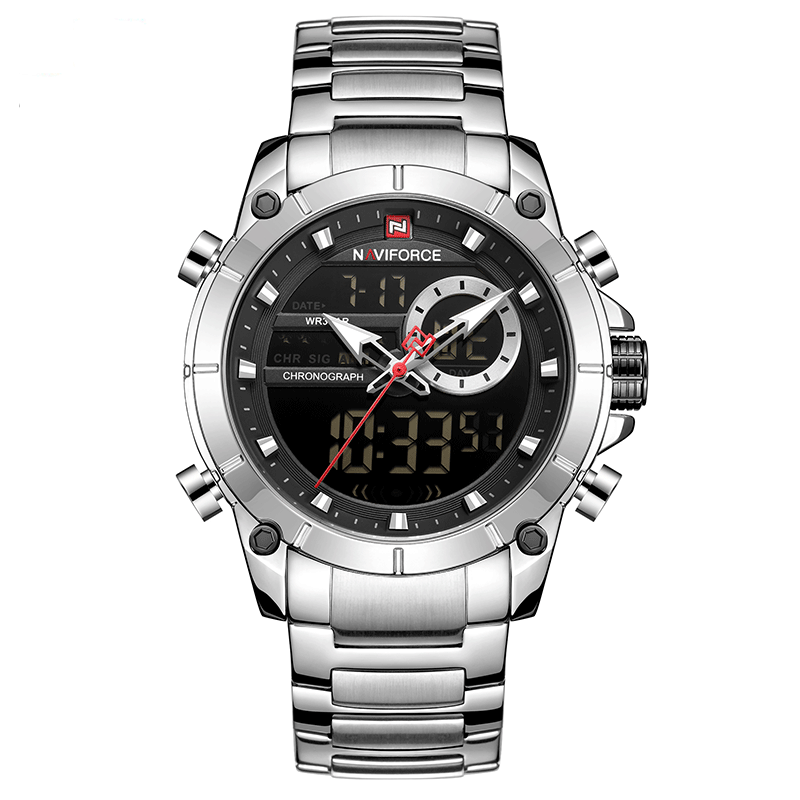 Digital Watch
 Quartz Standard Watch
 Quartz Calendar Watch
 Quartz
 Quartz Multi-Function Watch
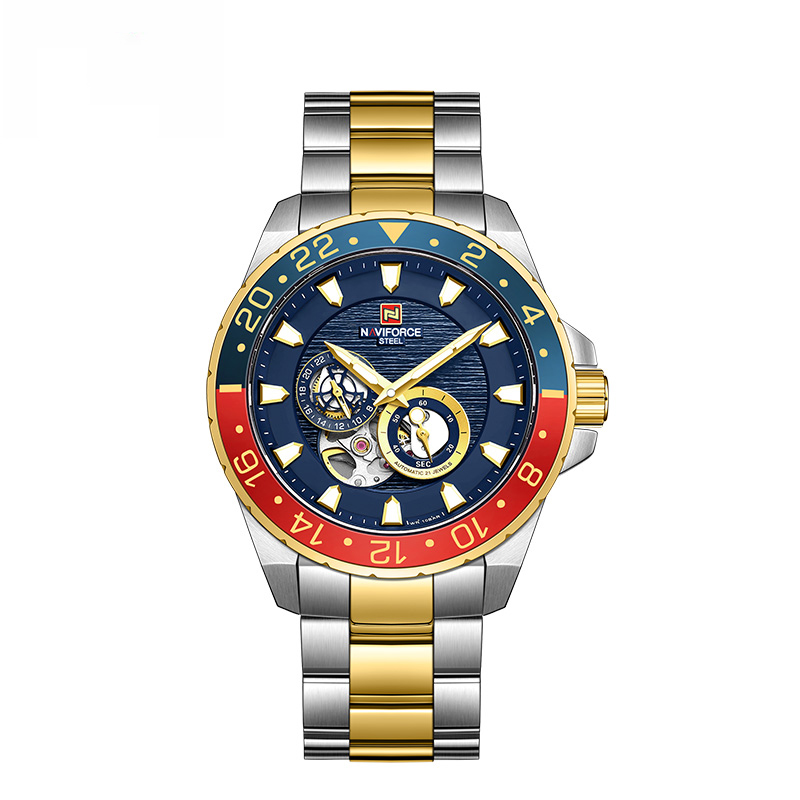 Automatic Mechanical Watch
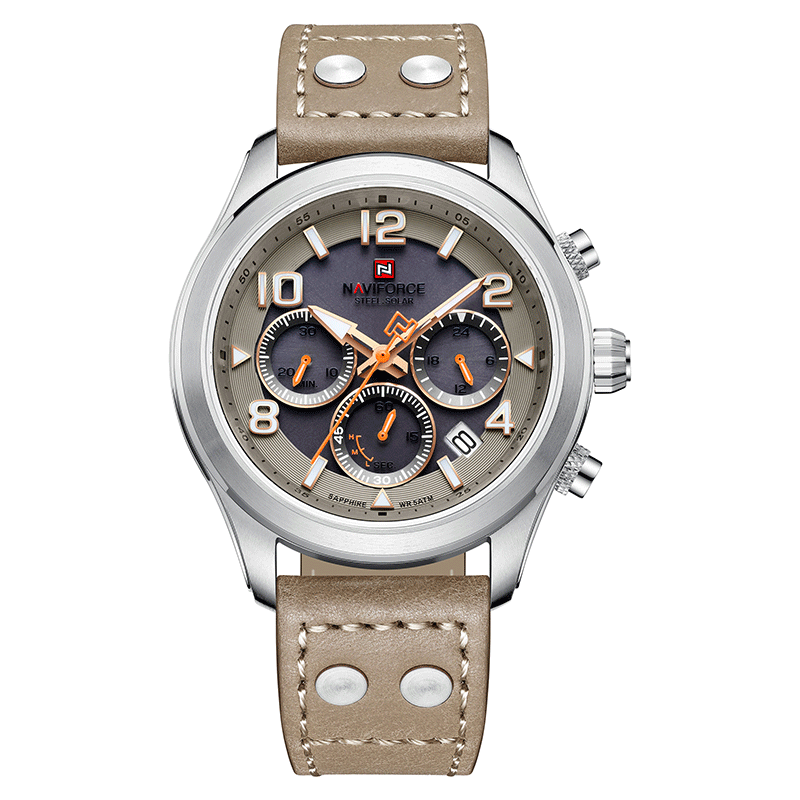 Solar-Powered Watch
 Smart Watch

Solar-powered watches use light energy to operate a quartz timekeeping system. Unlike conventional battery-powered watches that rely on replaceable batteries, solar watches convert light into electrical energy and store it in a rechargeable power cell.
This technology offers an alternative power solution for everyday watches, combining electronic timekeeping with light-based energy generation. It is used in various watch designs, including casual, sports, outdoor, and everyday models.
But how does a solar-powered watch actually work? What happens when the watch is exposed to sunlight, and how does it continue running in darkness?
Understanding the solar watch principle helps buyers evaluate its technology, performance, and suitability for different markets.

What Is the Working Principle of a Solar-Powered Watch?
A solar-powered watch works by converting light into electrical energy through a photovoltaic cell. The generated electricity is then stored in a rechargeable energy cell, which supplies power to the quartz movement.
The process involves four main stages:
Light absorption: Light enters through the watch dial or another light-receiving area and reaches the photovoltaic cell.
Energy conversion: The photovoltaic cell converts light energy into electrical energy.
Energy storage: The generated electricity charges an internal rechargeable cell.
Watch operation: Stored energy powers the electronic circuit and quartz oscillator, allowing the watch to keep time and operate its functions.
This process continues whenever sufficient light reaches the solar cell. When the watch is stored in darkness, it can continue running by using the energy already stored in its rechargeable cell, provided sufficient charge remains.
Main Components of a Solar-Powered Watch
A solar watch contains several components that work together to collect, convert, store, and use energy.
Photovoltaic Solar Cell
The photovoltaic cell is the core energy-conversion component.
It receives light and generates electrical energy through the photovoltaic effect. Depending on the watch design, the solar cell may be positioned beneath a translucent dial or integrated into the dial structure.
Unlike large solar panels used in buildings, watch solar cells are compact and designed to fit within the limited space of a wristwatch.
The efficiency of energy conversion depends on the cell technology, available light, and the watch’s construction.
Rechargeable Energy Cell
The rechargeable cell stores the electricity generated by the solar cell.
It supplies energy to the watch when light is unavailable, such as during nighttime or when the watch is covered by clothing.
Unlike a conventional disposable watch battery, this component is designed for repeated charging and discharging. However, its storage capacity and service life are limited, and it may eventually require replacement according to the manufacturer’s specifications.
Quartz Oscillator and Electronic Circuit
Solar watches generally use quartz timekeeping technology.
The electronic circuit supplies controlled electrical signals to a quartz crystal. The crystal oscillates at a stable frequency, providing the timekeeping reference for the watch.
The circuit processes these signals and controls the movement’s time display.
This means that solar-powered watches are generally a type of quartz watch. Their main difference from conventional quartz models is the method used to generate and store electrical energy.
Watch Movement and Display System
The movement uses stored electrical energy to operate the watch’s display.
Depending on the design, a solar-powered watch may use:
- Traditional hour, minute, and second hands
- Date or calendar displays
- Digital LCD screens
- Multifunction displays
- Additional electronic functions
The available functions depend on the movement and module specifications rather than solar technology alone.
How Does a Solar Watch Charge?
Solar watches charge when their photovoltaic cells receive sufficient light.
Both natural sunlight and suitable artificial lighting can generate electrical energy, although charging speed varies significantly.
Sunlight
Outdoor sunlight generally provides stronger illumination than typical indoor lighting. It can therefore help charge a solar watch more efficiently.
Indoor lighting
LED and fluorescent lighting can also provide energy, depending on their brightness, distance, and the watch’s solar cell characteristics.
Indirect light
A watch can receive some energy from indirect daylight, but charging may take longer than under stronger illumination.
It is important to understand that not all light sources provide the same charging performance. The time required to charge a watch depends on its movement, solar cell, rechargeable cell condition, and light intensity.
For this reason, buyers should follow the charging instructions provided by the movement or watch manufacturer rather than assuming that a fixed exposure time applies to every solar model.
Can a Solar-Powered Watch Work Without Sunlight?
Yes. A solar-powered watch does not need continuous direct sunlight to operate.
Once its rechargeable cell has stored sufficient energy, the watch can continue running in darkness.
This stored energy is commonly referred to as the power reserve.
The actual operating time depends on several factors:
- Rechargeable cell capacity and condition
- Movement energy consumption
- Number of additional functions
- Recent charging conditions
- Operating environment
A basic three-hand solar watch may have different energy requirements from a multifunction digital model with alarms, backlighting, or other electronic features.
Some solar movements also include a low-energy or power-saving mode. In these designs, the watch may reduce certain operations when stored in darkness to conserve energy.
Solar Watch vs. Conventional Quartz Watch
Both solar and conventional quartz watches use quartz-based electronic timekeeping, but their energy systems are different.
| Comparison | Solar-Powered Quartz | Conventional Quartz |
|---|---|---|
| Main energy source | Light | Replaceable battery |
| Energy storage | Rechargeable cell | Disposable battery |
| Charging method | Photovoltaic conversion | Battery replacement |
| Operation in darkness | Uses stored energy | Uses battery energy |
| Maintenance | Charging awareness and eventual cell servicing | Periodic battery replacement |
| Suitable applications | Everyday, casual, and outdoor watches | Broad everyday and fashion applications |
Solar watches can reduce the frequency of conventional battery replacement, but they are not maintenance-free. The rechargeable cell may eventually lose capacity, and other components may also require servicing.
Advantages of Solar-Powered Watches
Solar technology offers several practical advantages for watch users and retailers.
Reduced dependence on disposable batteries
Because the watch collects and stores light energy, users generally do not need to replace a conventional disposable battery as frequently.
Convenient everyday operation
A sufficiently charged solar watch can continue working in darkness, making it suitable for regular daily use.
Alternative power technology
Solar watches provide another product option for buyers looking to diversify their watch collections beyond standard quartz models.
Suitable for different watch styles
Solar movements can be incorporated into various designs, depending on the movement dimensions and case construction. They are not limited to large outdoor watches.
Limitations of Solar-Powered Watches
Although solar watches offer practical benefits, buyers should also understand their limitations.
Charging depends on available light
A watch stored in a drawer or covered for extended periods may not receive enough light to maintain its charge.
Charging speed varies
Indoor lighting, direct sunlight, and indirect daylight provide different levels of energy. Buyers should not expect identical charging results in every environment.
Rechargeable cells have a limited service life
The rechargeable energy cell gradually ages through repeated use. Its condition can affect how long the watch operates between charging periods.
Design and component compatibility matter
Solar cells, rechargeable cells, and compatible movements must be integrated into the watch design. This can affect dial construction, case layout, and component selection.
How to Maintain a Solar-Powered Watch?
Proper use can help maintain the charging performance and operating condition of a solar watch.
- Expose the watch to suitable light regularly according to the manufacturer’s instructions.
- Avoid leaving the watch in prolonged darkness.
- Do not place the watch on a dashboard or other extremely hot surface for extended periods.
- Follow the recommended charging conditions for the specific movement.
- Keep the solar-receiving area clean so that dirt does not unnecessarily obstruct incoming light.
- If the watch stops or loses normal operation, check the charging condition before assuming that the movement is defective.
Avoid using excessive heat as a charging method. Strong sunlight through a closed vehicle window, for example, can expose the watch to temperatures that may damage components.
What Should Wholesale Buyers Know About Solar Watch Manufacturing?
For wholesalers and private label brands, choosing a solar-powered watch requires more than checking its external appearance.
The movement and energy system should be evaluated as part of the complete product specification.
Movement supplier and model
Request the movement manufacturer, caliber or module reference, and technical documentation. This helps buyers understand the charging system and operating requirements.
Rechargeable cell specifications
Confirm the type of energy-storage component, its rated capacity where available, replacement requirements, and recommended service conditions.
Charging performance
Ask for the manufacturer’s charging specifications under defined light conditions. Charging performance should not be estimated from appearance alone.
Power reserve
Check the stated operating duration after a full charge and the conditions under which that figure is measured. Different movement models may have substantially different power reserves.
Product functions
Confirm whether the solar movement supports the required display and functions, such as three-hand timekeeping, calendar indications, alarms, or digital displays.
Sample testing
Before placing a bulk order, request a sample and evaluate its charging response, timekeeping, display operation, and general construction.
For OEM projects, confirm the movement and technical specifications before finalizing the case and dial design.
Frequently Asked Questions About Solar-Powered Watches
Do solar watches use quartz movements?
Most solar-powered watches use quartz-based timekeeping. They combine a photovoltaic cell and rechargeable energy storage system with an electronic quartz movement.
Can a solar watch charge under indoor lighting?
Yes. Suitable artificial lighting can generate electricity through the photovoltaic cell. However, charging speed depends on light intensity, distance, and the watch’s solar technology.
How long can a solar watch run without light?
It depends on the movement, rechargeable cell capacity, charging condition, and power consumption. Some models can operate for extended periods without additional light, but buyers should check the manufacturer’s stated power reserve.
Does a solar watch need battery replacement?
Solar watches do not normally use a conventional disposable battery. However, the rechargeable energy cell can age and may eventually require replacement.
Can a solar watch be charged through artificial light?
Yes. Natural sunlight is not the only energy source. Suitable LED and fluorescent lighting can also charge many solar watches, although the process may take longer.
Are solar watches suitable for outdoor use?
They can be suitable for everyday outdoor use, provided their case construction and water resistance meet the intended application. Solar power itself does not make a watch waterproof or suitable for every outdoor condition.
Is every quartz watch solar-powered?
No. Conventional quartz watches usually use replaceable batteries, while solar quartz watches use photovoltaic cells and rechargeable energy storage.
Final Thoughts
The solar-powered watch principle is based on converting light into electrical energy, storing that energy, and using it to operate a quartz timekeeping system.
Its main components include a photovoltaic cell, rechargeable energy cell, electronic circuit, quartz oscillator, and display mechanism. Together, they allow the watch to collect energy from light and continue operating when light is unavailable.
For wholesale buyers, understanding these components makes it easier to evaluate solar watch specifications, compare suppliers, and select suitable models for different markets.
When sourcing solar-powered watches, always confirm the movement reference, charging conditions, power reserve, rechargeable cell specifications, and sample performance before placing a bulk order.

Reasons for choosing NAVIFORCE:
- 10+ Years Watch Manufacturing
- 1000+ Wholesale Clients
- OEM & Private Label Expert
- Global Shipping Support
- Modern watch designs built for global buyers. Low MOQ, custom branding, fast production.
Welcome to our website:
NAVIFORCE Brand Website: https://www.naviforce.com/
NAVIFORCE Shopify Store: https://the-naviforce.com/
Post time: Nov-03-2026


